

Art Hacks I Actually Use
5 things I actually utilize that make me better at making

Normally this Friday post is 5 things from the studio, but this week I thought I’d share some bits and bobs that make my days in the studio better. They are super simple and maybe a bit obvious, but they are easy to implement and have helped me over the years. As always, your mileage may vary! 1
1. STUDIO SPACE IS FOR WORK
I work from home. My studio is off of the kitchen with a pellet stove, a big porch door facing the woods, a comfy chair, and my library of hand-picked books. It’s a place that feels the most me in the entire house. It’s designed to be a place I want to be.
I made a rule a long time ago that I’d only do things in the studio that directly relate to work. I don’t spend time there doing things unrelated to the business of making books for kids, writing things, or art making. It’s a hard line.
Why it works: There’s no blurriness. My space is where I make things. I enter into the studio and I’m on mission. The outside world is not invited. When I get up and walk 8 feet into the kitchen, I’m home doing Dad and spouse things (Like doom-scrolling my black rectangle instead of doing the dishes.)2
★ Become a Paid Subscriber ★
I’ll leave you with this comment from recent paid subscriber, Stacey Ramirez: “Hi Jacob. I just upgraded to your paid subscription. I’ve been getting your weekly newsletter and I look forward to it every week. I get so much out of it. Just a note to say thank you and keep up the good work!”
2. KEEP INSPIRATION IN HARD COPY FORM + ON HAND
One of the things that I’ve started doing is keeping my favorite picture books, art books, and inspiring objects at hand and in the studio — and then actually looking at them. The internet has those things, but also comes with heavy dosages of distractions. “Look at this beautiful image! But also want to buy a bunion remover?” There’s also something about holding a physical object in your hand that makes it feel closer, more real. My understanding of why something works gets better over time and returning to these items brings a fresh understanding.
Why it works: I work in fits and starts, often with large chunks of time devoted to an illustration or writing my newsletter. There will inevitably be small moments where I’m done with one thing but don’t have enough time or energy to devote to another time intensive task. Keeping these things at hand, means I can give 20 minutes to re-exploring an amazing picturebook or drooling over some art work that makes me want to make. It’s a reminder of why I’m here.
3. INVENT NEW WAYS TO WORK
In my quest to “just get better” at writing and illustrating for kids, I’ve found myself in ruts of my own making. The “this is how I do it” that was helpful for a year, but unbeknownst to me lost its value 3 months ago. A retooling of my process (writing or illustrating) to come at a problem from a slightly different angle is needed.
A couple of examples. I wrote Just Jelly in one session. The initial version just kind of tumbled out. “That must be how I write books!”, I thought. No, other stories have required a kind of building up of notes about the characters in my sketchbook as a weekly practice. In my illustration process, I’ve often drawn a sketch and then worked the colored illustration directly under the sketch layer. I’ve gotten very good at working this way, but it comes with a tightness that doesn’t always serve the image. I’ve begun to sketch the idea, move it to a corner, and then build the illustration like a collage. It’s much looser and scratches that itch.
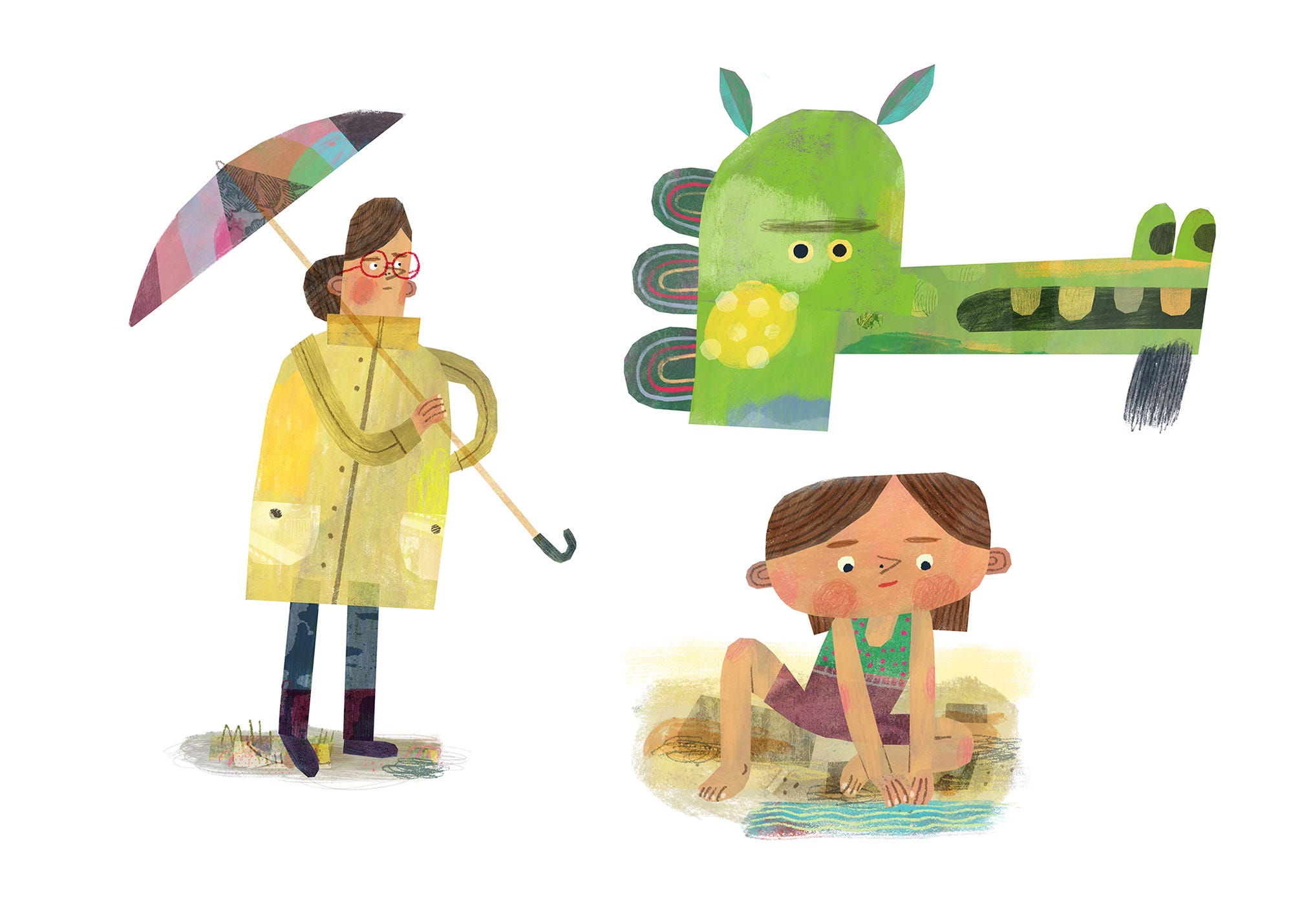
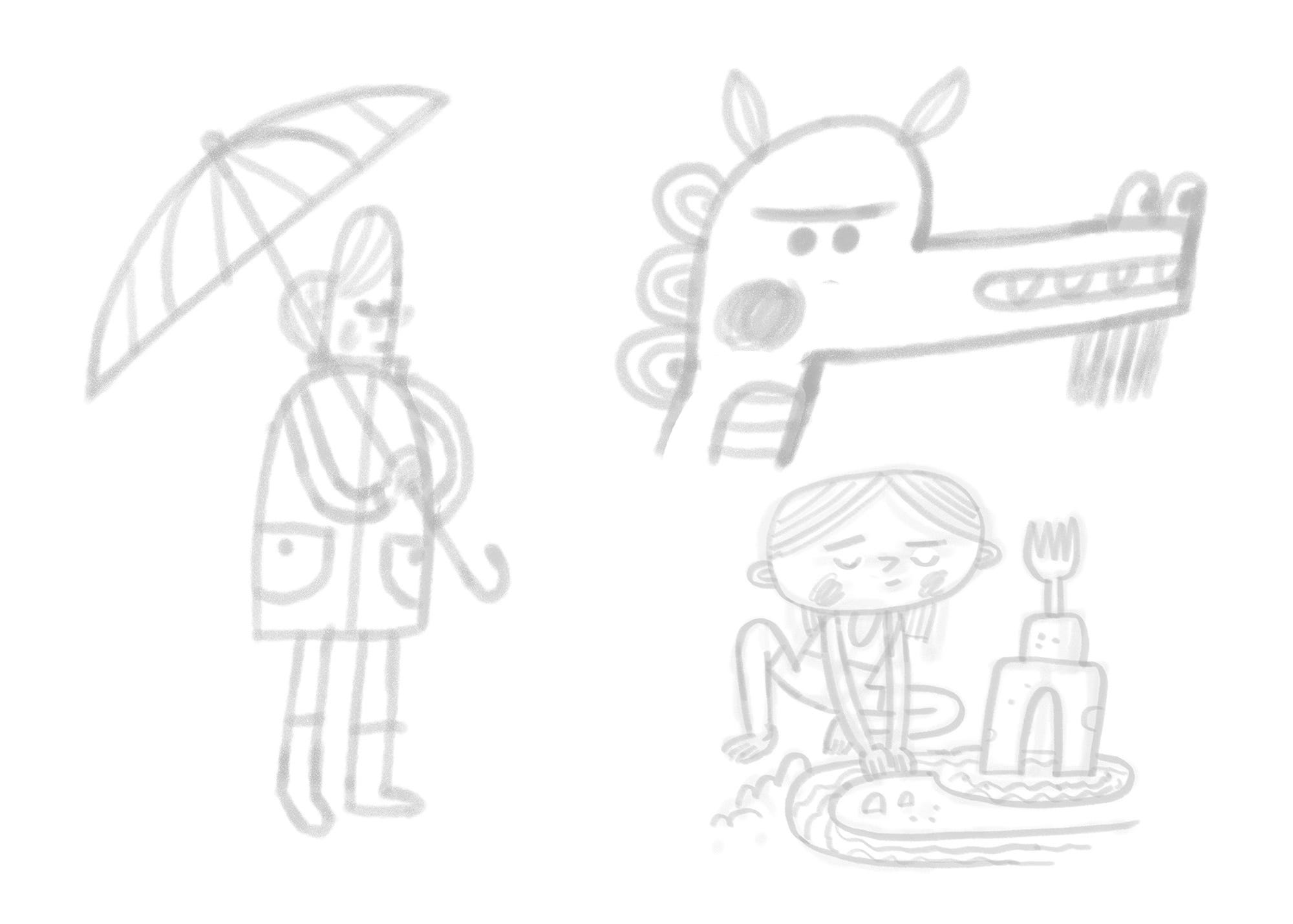
Why it works: The same ways of working can produce the same results, yet with less life. Frameworks are guide rails — meant to keep you safe. Breaking free can break loose something important and new.
4. PUSH THROUGH THE UNCOMFORTABLENESS
Inventing new ways to work is uncomfortable! My scant exploration of creativity as a science led me to this very, very simple yet powerful truth: Our brains want to hang out where it’s safe. Trying new things, playful exploration, growing is all wholly uncomfortable.3 It’s why creating something from nothing can feel like pushing a rock up a cliffside.
Pushing through this means saying “Whelp. The result is not great and I felt a bit like a failure. BUT! What did I learn? Can I apply that to my creative practice?”
(One thought that will dog you in addition to the uncomfy feeling is the idea that you don’t have time to learn; that the rest of the world is moving on while you learn slowly. This is a fallacy. Most people are actively and subconsciously trying to avoid hard earned lessons.)
Why it works: Artistic growth and creativity come from the same place — Stepping away from what you know. I’ve learned to embrace this feeling! (But it still sneaks up on me and leaves me wondering if I’ve wasted days on something that had little value.)
5. MAKE YOUR WORK LESS PRECIOUS
Art can feel like something you must save simply because you put time into it. I wrote this story and even though it stinks, I will save it in the file folder to look back on. I spent hours on this sketch, it sucks. Let’s save it! I enjoy throwing bad ideas and bad art out. I routinely draw in Photoshop and then delete the layers. I know many art people with messy sketchbooks and notepads that they will never share with another living soul. This isn’t a hard and fast rule, it’s more of a vibe or attitude.
Why it works: Making what we make less precious places the emphasis on the process instead of the results. My thinking is that in getting it out and onto the page, even if it’s a dud — I’ve learned what I need to learn. The thing that is left is an artifact and maybe worth saving and maybe not. The lesson learned is what was gained.
I have more, like #16: When procrastinating, make fresh coffee so you're jittery and not getting things done. Or #57: Pity parties take energy and therefore count as work.
(But they do start to degrade past 10 or so.)
See you next week, friends!
Best,
Jacob
I’d love to hear about things you do to making creating more joyful. What are your hacks that I can steal and appropriate?
This separation between studio and house is entirely geographical, as I see “my job” more holistically:

This is normal! I wrote about it when I was taking some major chances on Big Bike, Little Bike. It was my first book that I worked on under my then brand new agent. I was freaking out a bit.

Thanks for these suggestions! I definitely need to focus on the tangible artifacts instead of digital ones. For space, I have a dedicated studio space, but I’ve found I have to actually make more of an effort to allow “making art” to take place anywhere and everywhere. I have little piles of art supplies in different parts of my house. If I kept it to the studio, I found it too easy to just not go there as an excuse that I can’t do anything creative unless I am in the studio. I have to trick myself into not making excuses like “it’s too far to go downstairs” which it is decidedly not. “Oh, I should stay upstairs and make dinner soon.” If I have some sketchbooks and pens around here and there, I can just grab them and begrudgingly start something. And then, then, I don’t want to stop! And no one gets dinner 😊 but I’ve made some art!
Thank you for sharing these great tips, Jacob! I’m blessed to have a designated room for my studio, but I still work on my kitchen table often! I need to make my studio more inviting and inspiring so I want to be there. Getting ready to tackle declutterring, organizing, and cleaning my studio this weekend!