

Chats by the Cauldron
5 things from the studio this week

Monday: My Mom (Sharon Bottle Souva) brought me birthday pie in advance of Friday’s big clock turning over. Tuesday: I made the art below. Wednesday: Had a breakthrough on a picture book idea. Researched my breakthrough to make sure it hadn’t been done, specifically. Took a half day and watched my boys win a #12 vs #5 upset in school soccer. Thursday: Fuel oil ran out. Cold showers and wrenches in the basement is no way to start the day. Researched next week’s deep dive. Friday: Sending you this newsletter.
1. SOME ART MAKING
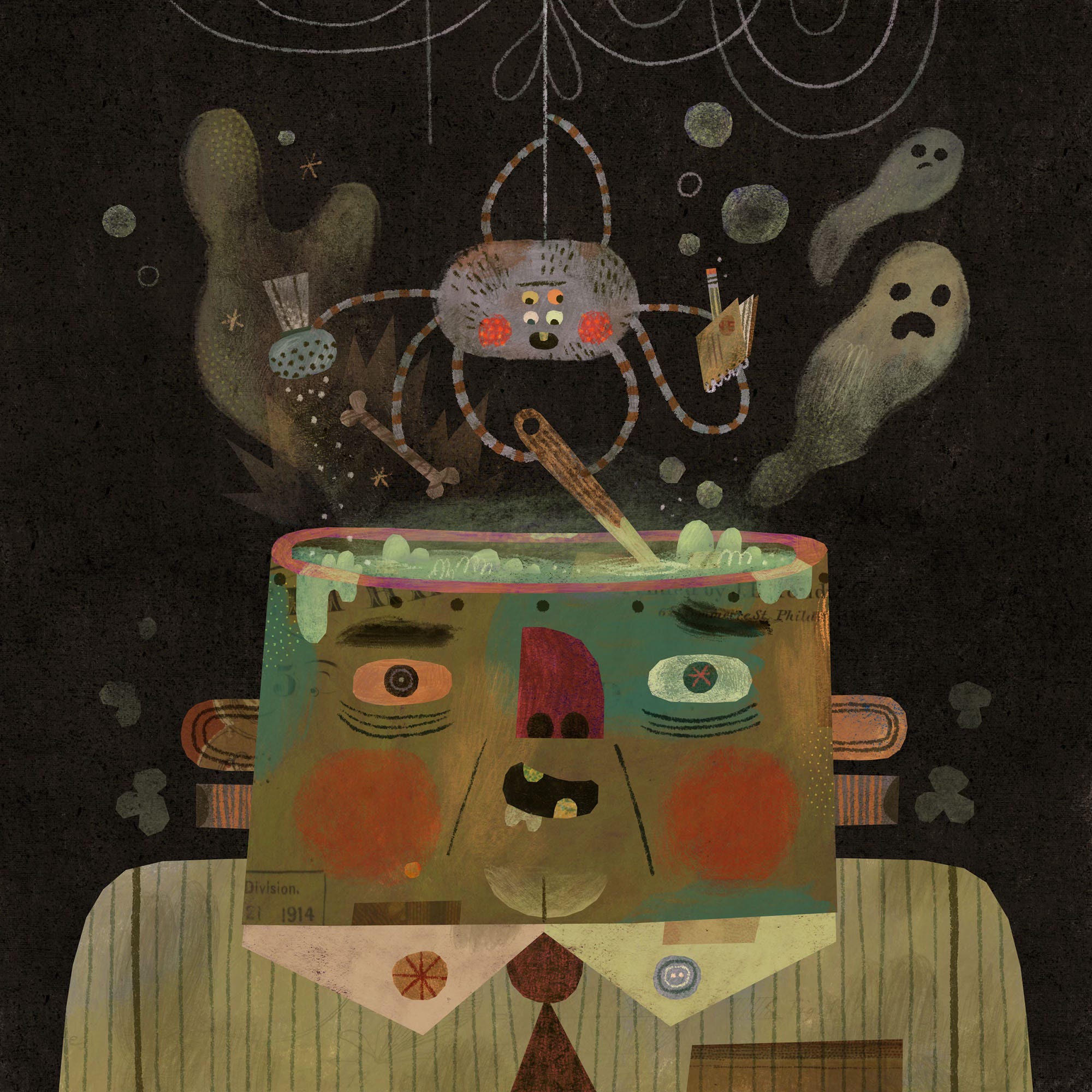
I wasn’t sure this one would come together. I wanted to riff on the #ABLArt prompt for this week “Chats by the Cauldron” and loved the concept. There are times when the many semi-different flavors of my style can come into conflict with each other. Too graphic? Too flat? Too collaged? In the end, I think I sewed enough of the bits together to make it work. I frankenstein-ed it.
And as always, learned some things.
★ Become a Paid Subscriber! ★
Hey! I’m an author and illustrator of books for kids. Drawing a Blank is about getting better at <waves at everything in the studio> out loud and as authentically as I can muster. Every Friday, I send out 5 things from my studio that week. It’s the kind of ground level “here’s what I’m thinking about and working on.” It’s free. Every other Wednesday, the paid subscribers go on a deep dive. I hope it’s an encouraging and practical stop on your way to something great. Let’s get better together, bit by bit. Also I use a lot of bad analogies.
2. WORK WISDOM
“You cannot write for children. They’re much too complicated. You can only write books that are of interest to them.”
— Maurice Sendak
Like a pea beneath my mattress, this quote has annoyingly stuck with me.1 It’s so much harder to write books that are of interest to children than to write for them.
Honestly, if I think of the most “sticky” books that kids seem to devour, the real tent poles of #kidlit — they all clear this line. Conversely, it’s why well made books (exceptional art, beautiful words, wonderful design) can fail to resonate with their intended audience. Kids can say “yeah, it’s not interesting enough” even while adult critics love it.
(This pea will be with me for a while.)
3. THING I LOVED
Sometimes I stumble across things, save them, and don’t remember the context of any of it. The internet, at its best is great for this kind of random discovery — like waking up in a niche antique shoppe filled with someone’s drunk thrift store finds. I say all that to say, I really loved these 28 slightly rude notes on writing. And this especially:
Personally, I think the reason is far more sinister: making art is painful because it forces the mind to do something it’s not meant to do. If you really want to get that sentence right, if you want that perfect brush stroke or that exquisite shot, then you have to squeeze your neurons until they scream. That level of precision is simply unnatural.
And this:
There’s something special about every word written by a human because they chose to do this thing instead of anything else. Something moved them, irked them, inspired them, possessed them, and then electricity shot everywhere in their brain and then—crucially—they laid fingers on keys and put that electricity inside the computer. Writing is a costly signal of caring about something. Good writing, in fact, might be a sign of pathological caring.
4. A BOOK TO READ
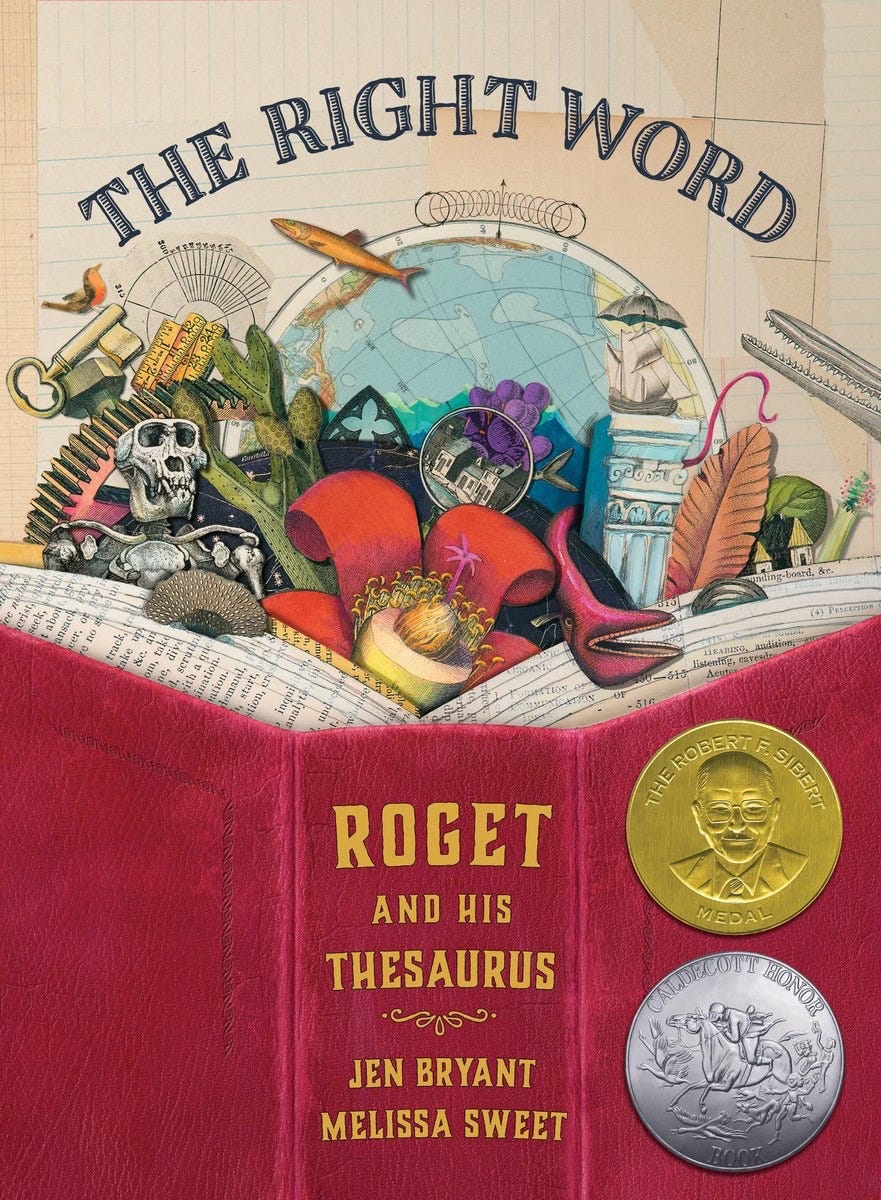
Somehow I was a Dad who loved to read to his boys at night, while plotting my jump into kid lit as an illustrator — and missed this gem when it won the Caldecott honor in 2014. If you’ve been following along in my paid subscriber deep dives, you’ll know I have been hunting down Melissa Sweet’s delicious collage work since I returned from Milkwood in August.
Roget and His Thesaurus (by Jen Bryant) is the story of Peter Mark Roget and his lists of words that became the modern day Thesaurus. The job Melissa did with this is… Astounding. Spectacular. Striking. Dazzling.2
One of the most challenging types of picture books to illustrate is a biography of a writer. There needs to be more to the story than someone writing at their desk over and over again.
Her answer the this problem was to first delve into his lists, combine them with the narrative arc and the words of the author (and 3D elements?) — to land at a kind of illustration with words. This is as bold and really exciting addition an illustrator can make to a project. It’s highly effective.
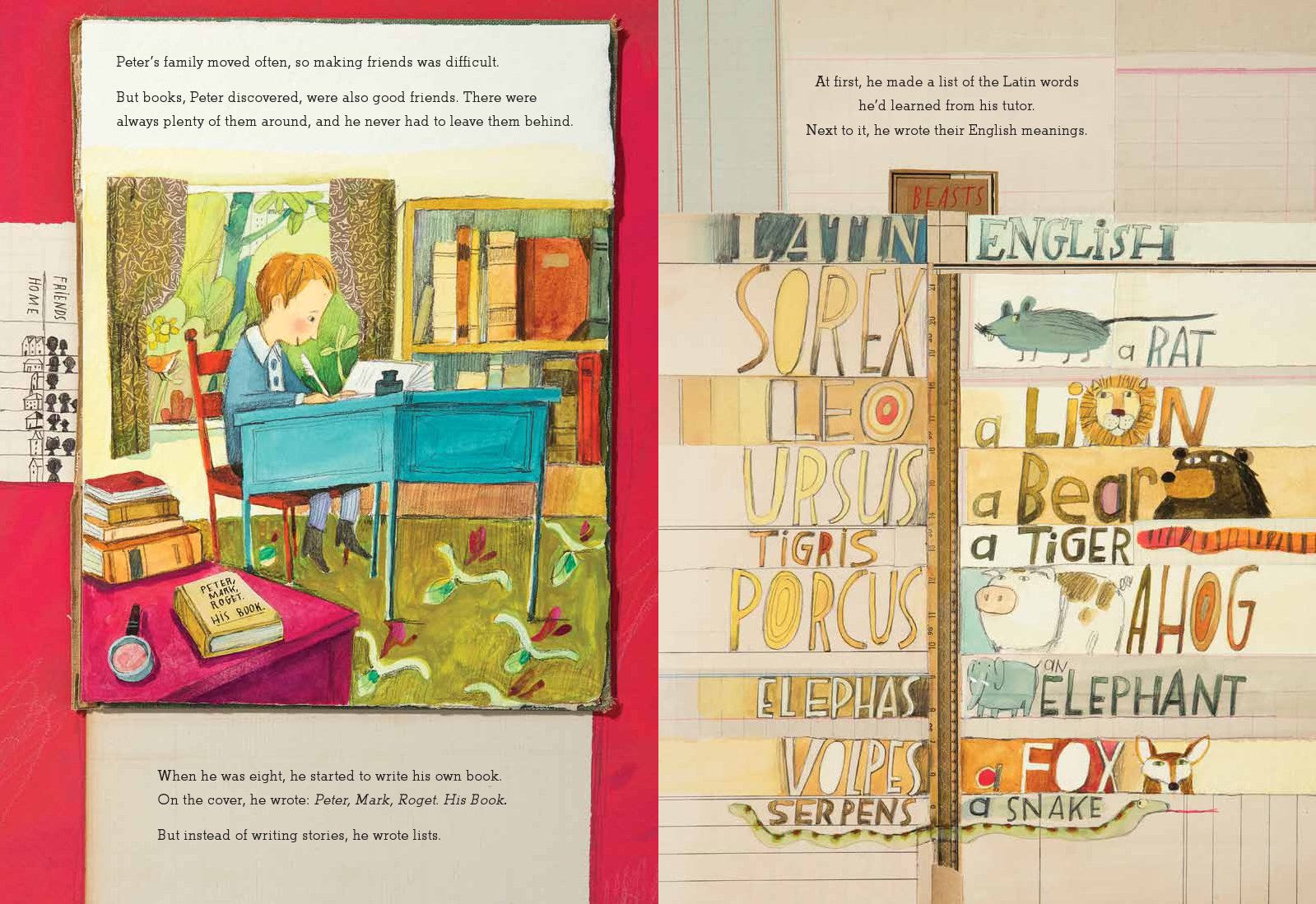
Once I had the word lists for a given spread, the collages had a life of their own. There’s no real way to know what the final art will look like. I just begin.
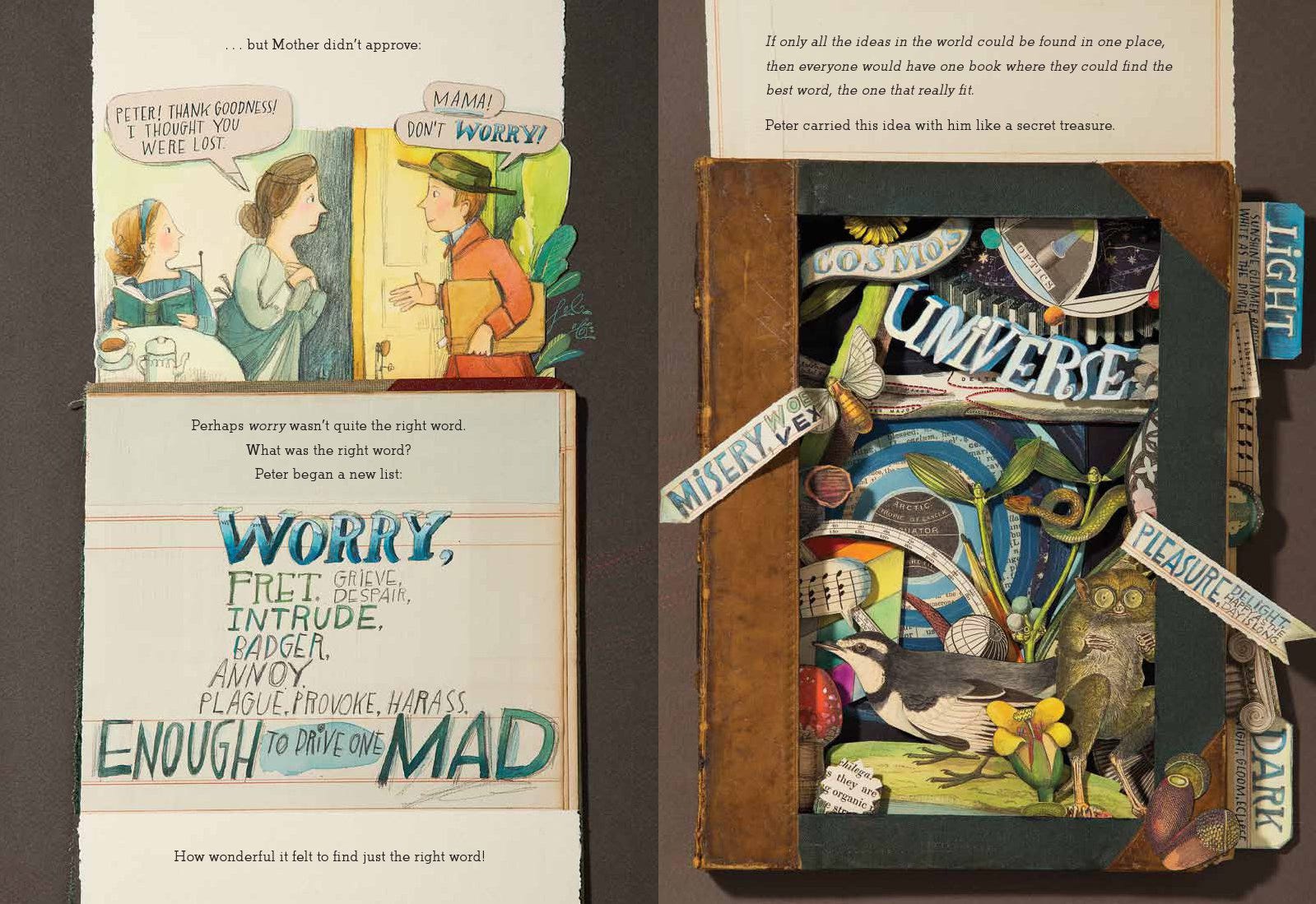
Stunning.
5. EPHEMERA, ETC.
I’ve been thinking a lot about the creative habits I’ve built up recently. They are helpful in a specific sense (pencil to paper, makes a better draftsperson), but big picture they are an excuse to show up. To sit and make something, add to the idea bin, and get just a little bit better. And maybe they all add up to a lightning bolt of a new thing. It’s this tic-tocking towards something unknown that brings so much joy with just a hint of subtle angst. Lol.
See you next week!
Best,
Jacob

Sorry couldn’t help myself. Thesaurus-ing. I’m 100% sure I’m not the only reviewer of this book to use this trick. I didn’t even look. I just know the type. (Awesome. Stupendous. Tiresome?)
Happy late birthday Jacob!!!!
Happy birthday!